
Colonial Kitchen Renovations: Working to Balance Function & Historic Character
January 30, 2026Colonial homes hold a special place in New England/Bosontian architecture. Their balanced proportions, millwork, and purposefully defined rooms are hallmarks of design heritage. Yet the kitchens within these homes were designed for a very different era, one that doesn’t always align with how we live today.
Classic colonial kitchens are smaller, more isolated spaces meant for function rather than gathering. At Slocum Hall Design Group, our architects’ approach to a colonial kitchen renovation begins with a question: how can we bring contemporary function into the heart of the home while preserving the historical design language that makes the house unique?
Rather than replacing character, our goal is to build upon it. Colonial kitchens can evolve into open, welcoming spaces without losing the proportions, craftsmanship, and style that define the home’s identity.
Extending Historic Details Into the Kitchen
When renovating Colonial kitchens, it’s important to maintain visual continuity with the rest of the home. Period-appropriate moldings, trims, and cabinetry proportions help the kitchen feel as though it has always belonged within the space. When original millwork can be preserved, it becomes an anchor for the rest of the renovation.
Even when new elements are introduced, we often extend traditional moldings and paneling into the kitchen to create a pleasant transition between historic and newly designed spaces. Custom cabinetry using classic door profiles and refined detailing echoes the home’s design roots while accommodating modern storage needs.
Zones for Cooking, Entertaining, and Everyday Life
Today, kitchens serve as the social beating heart of the home; making this shift requires thoughtful spatial considerations. In Colonial homes, especially, it’s important to create clear zones that support both cooking and entertaining without disrupting the home’s original structure. Large kitchen islands work for preparation space and casual seating, while secondary work areas and walk-in pantries keep the primary kitchen calm and organized.
Sightlines also play a key role. By opening carefully chosen connections between the kitchen and adjacent rooms, we allow activity to flow naturally between spaces. The goal is openness with intention; connection without completely erasing the architectural definition that gives Colonial homes their warming charm.
Introducing Light and Connection
Historic kitchens were often located toward the back of the house, which can limit natural light, depending on the original orientation. Renovation offers an opportunity to rethink how daylight enters space. Installing larger kitchen windows, openings to adjacent rooms, and improved interior sightlines can dramatically brighten the kitchen. Material selection reinforces this effect. Lighter finishes, reflective surfaces, and thoughtful color palettes allow daylight to move more freely through the room, making the space feel open.
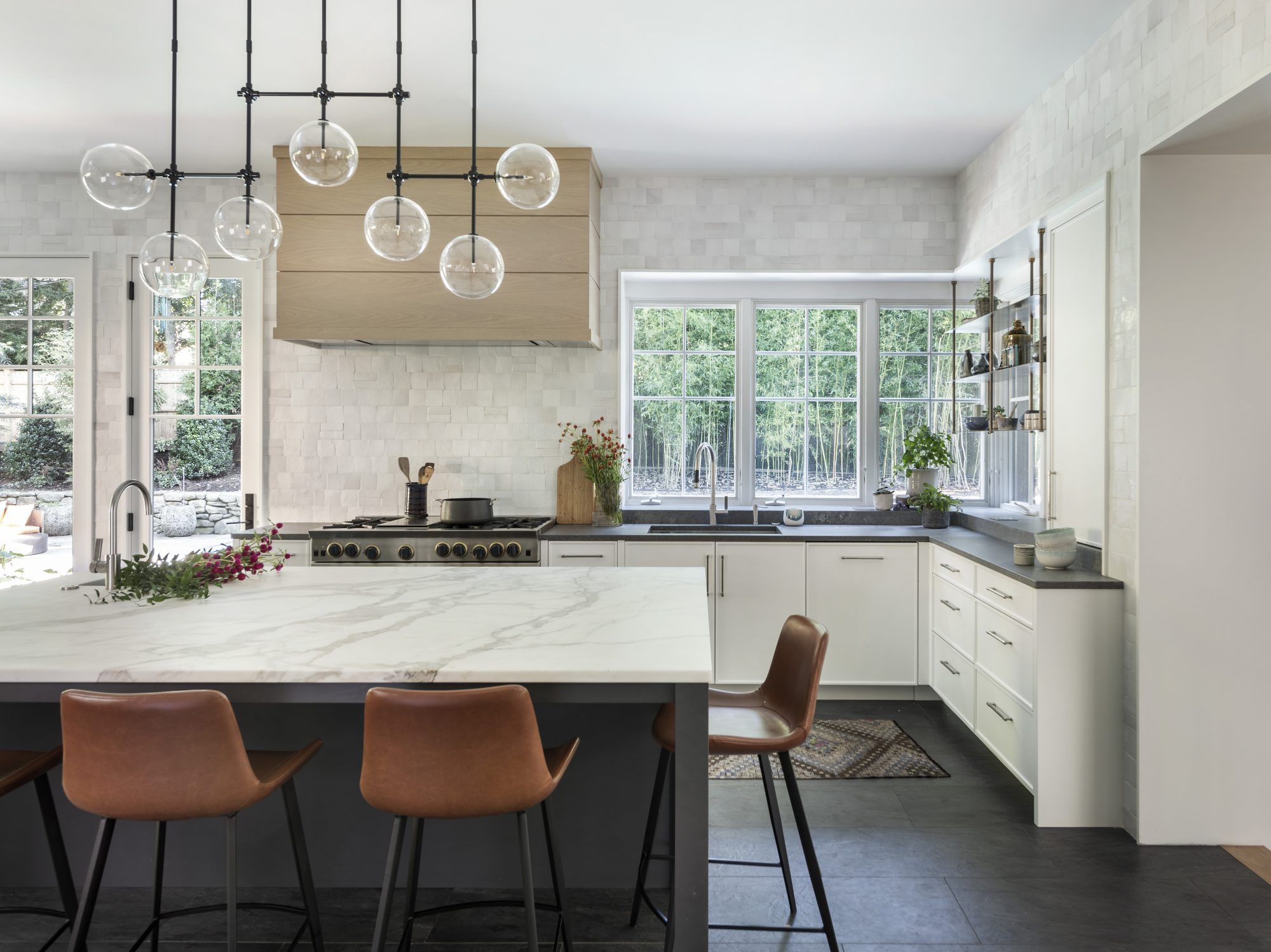
The Residence on West Newton Hill
One of our favorite examples of this modern kitchen with historic design philosophy can be seen in the Residence on West Newton Hill. When the homeowners purchased the property, the house required a complete transformation. Rather than enlarging the footprint, the project focused on reconfiguring the interior layout to improve the flow of the entire first floor.
The renovation opened the kitchen to the surrounding living areas, allowing the space to function as a natural hub of the home. At the same time, the design maintained a sense of structure and warmth appropriate to the house’s roots. The result is a kitchen that feels open and modern while still belonging comfortably within the Colonial framework.
Balancing Tradition and Innovation
A successful Colonial kitchen renovation does not attempt to erase the past. Instead, it builds upon it – respecting the home’s proportions and craftsmanship, and introducing modern functionality in a way that feels natural and lasting – not haphazardly worked in.
As one of the premier architectural firms in Boston, we love these types of renovations because they are an opportunity to connect history with contemporary living.
Connect with our team to learn more.
