
When an Attached Garage Becomes an Architectural Opportunity
February 12, 2026In many New England homes, the garage was historically treated as a secondary structure – detached, utilitarian, and often disconnected from the daily rhythm of the house. Today, homeowners are looking for something different.
There has been a noticeable rise in demand for attached garage additions that improve convenience and design integrity. When approached tactfully, a garage addition can do far more than provide surplus parking. It can solve site challenges and improve circulation; it can also introduce new transitional spaces that strengthen how a home functions day-to-day.
Connections That Improve Daily Life
One of the greatest advantages of attaching a garage to an existing home is the opportunity to create a sheltered transition between indoors and outdoors. For Bostonians/New Englanders, that connection often takes the form of a breezeway or mudroom, where coats, boots, and everyday items can be organized before entering the main living spaces. These zones mediate between the garage’s more utilitarian functions and the warmth of the home itself. By carefully designing these connections, the garage becomes an integrated part of the house rather than an afterthought.
Solving Site Challenges Through Design
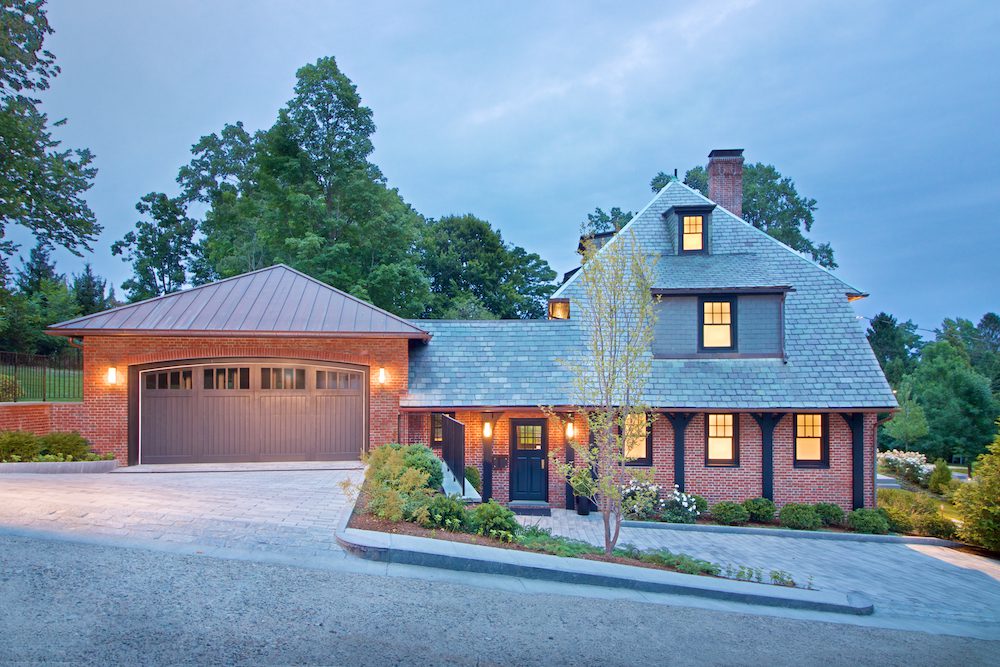
A great example of this strategy can be seen with our renovation project, the Residence in Waban. Originally a 1916 stucco home influenced by Craftsman detailing, the house had not been meaningfully renovated for decades, and its layout no longer supported modern living.
The renovation introduced a new kitchen, family room, and mudroom that connects directly to the garage, improving both circulation and functionality while keeping the historic character anchored on one of the street-facing façades.
Rather than competing with the existing architecture, the new elements were designed to feel like a natural extension of the home. The garage connection helped the interior layout to evolve, bringing everyday functions closer together while maintaining the historic integrity of the original structure.
Material Continuity and Architectural Harmony
The success of garage additions depends heavily on material continuity. Matching exterior materials, rooflines, and detailing helps the addition feel cohesive rather than appended. Stone, brick, siding, and trim profiles often echo the existing house, so the garage appears to have always belonged on the property.
Some of our garage addition projects also include lifestyle enhancements such as radiant-heated driveways, for safe, ice-free access during the winter months, something homeowners love having and never regret having opted for after one icy season.
Turning a Utility Space Into an Architectural Asset
An attached garage addition. With thoughtful planning, these additions can reshape how people move through their homes, introduce gathering or storage spaces, and solve site constraints that might otherwise limit the property’s potential.
Contact our design team today to discuss how an attached garage addition can make your home more complete and functional.
