
Behind the Build: A Modern Reimagining of an 1860s Farmhouse
March 30, 2026Transforming a historic home is never about erasing the past; it’s about redefining how it lives today. For this 1860s farmhouse in Newton, Slocum Hall Design Group approached the project with a clear vision: preserve the essence of the original structures while introducing a bold, modern framework for contemporary living.
Originally composed of two separate buildings, a 1,800-square-foot main house and a 700-square-foot barn-turned-garage and screen porch, the property lacked cohesion. By fully gutting the home and introducing a thoughtful addition, the team created a seamless connection between the two structures, fundamentally changing how the home functions.
At the core of the design is a deliberate view axis that begins at the entry and extends through the living spaces to the rear of the property. This visual connection draws the landscape into the home, reinforcing a strong indoor-outdoor relationship that defines the project.

The central living area serves as the home’s hub, where the kitchen, dining, living, and entry spaces flow together while maintaining distinct identities. In the kitchen, rich walnut cabinetry grounds the space, adding warmth and depth to the home’s modern palette.
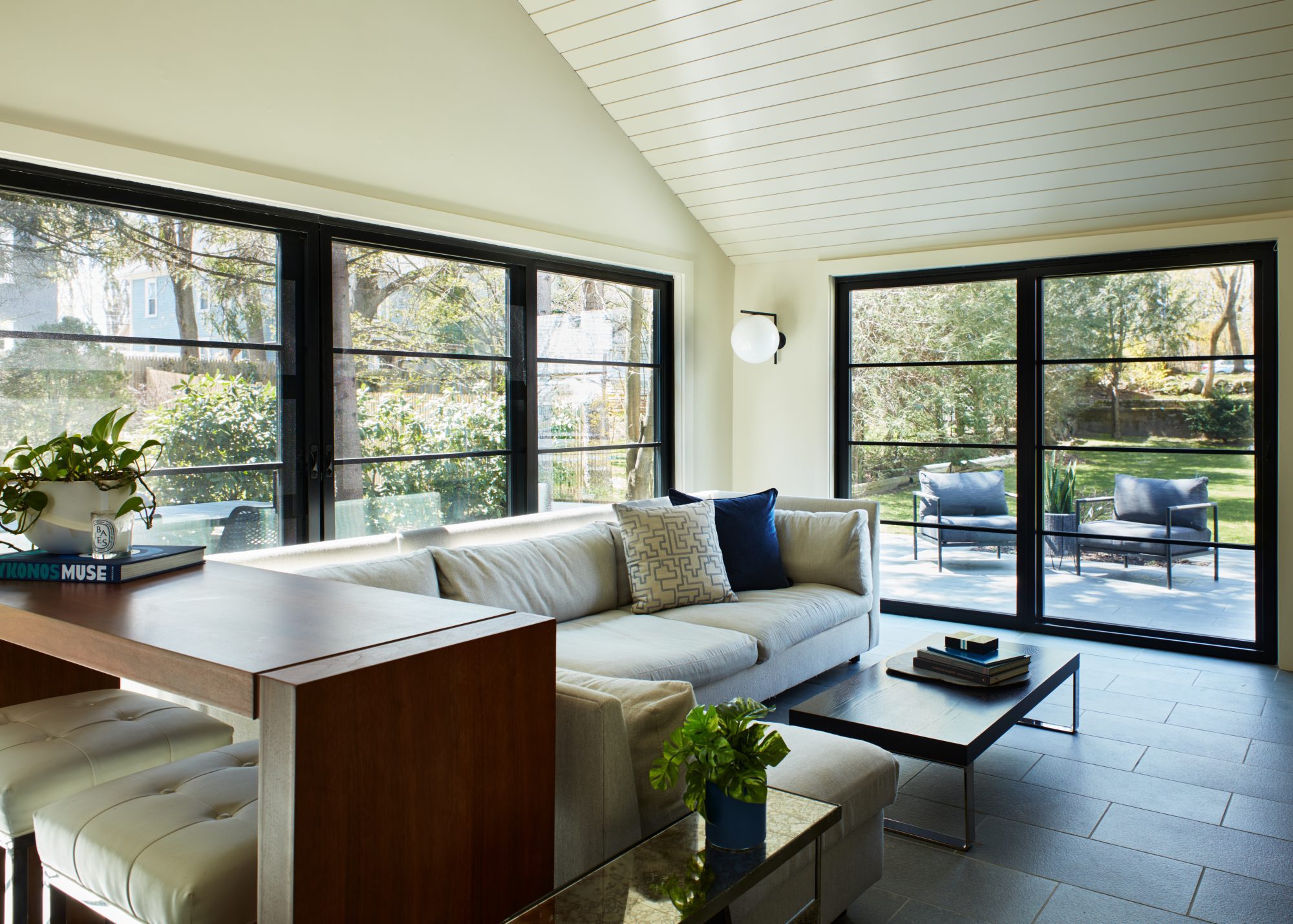
Moments of contrast and character are layered throughout. The former screen porch is now a light-filled family room, defined by a shiplap ceiling and continuous stone flooring that extends to the outdoor patio, blurring the boundary between inside and out. Elsewhere, custom millwork details at the stair and fireplace introduce a subtle rhythm and craftsmanship.
On the second floor, the addition houses a private primary suite complete with a generous closet, en-suite bath, and roof deck – offering a quiet retreat within the larger composition.
From the exterior, the transformation is both restrained and striking. A matte black façade paired with high-gloss trim, Sapele mahogany posts, and a walnut front door creates a distinctly modern interpretation of a traditional farmhouse form.
This project is a study in balance, where history meets intention, and architecture evolves to support the way we live today.
