
Why Great Rooms Continue to Define Modern New England Homes
June 16, 2026There was a time when homes were designed around separate, highly defined spaces. The kitchen was tucked away from guests, the dining room was reserved for special occasions, and the living room often sat quietly between them. While many families lived that way decades ago, today’s homeowners want something different: spaces that bring people together, not scatter them. Great room design continues to define modern New England homes for this very reason.
At Slocum Hall Design Group, we know firsthand how a thoughtfully designed great room becomes far more than a large open space. Many of these great room transformations begin as part of a larger home renovation architecture project, and end up being the homeowners’ favorite new feature.
More Than an Open Floor Plan
The best great rooms aren’t created by removing walls. In fact, openness without intention can leave a home feeling oversized and lacking character. Instead, successful great room design relies on carefully balancing openness with architectural definition.
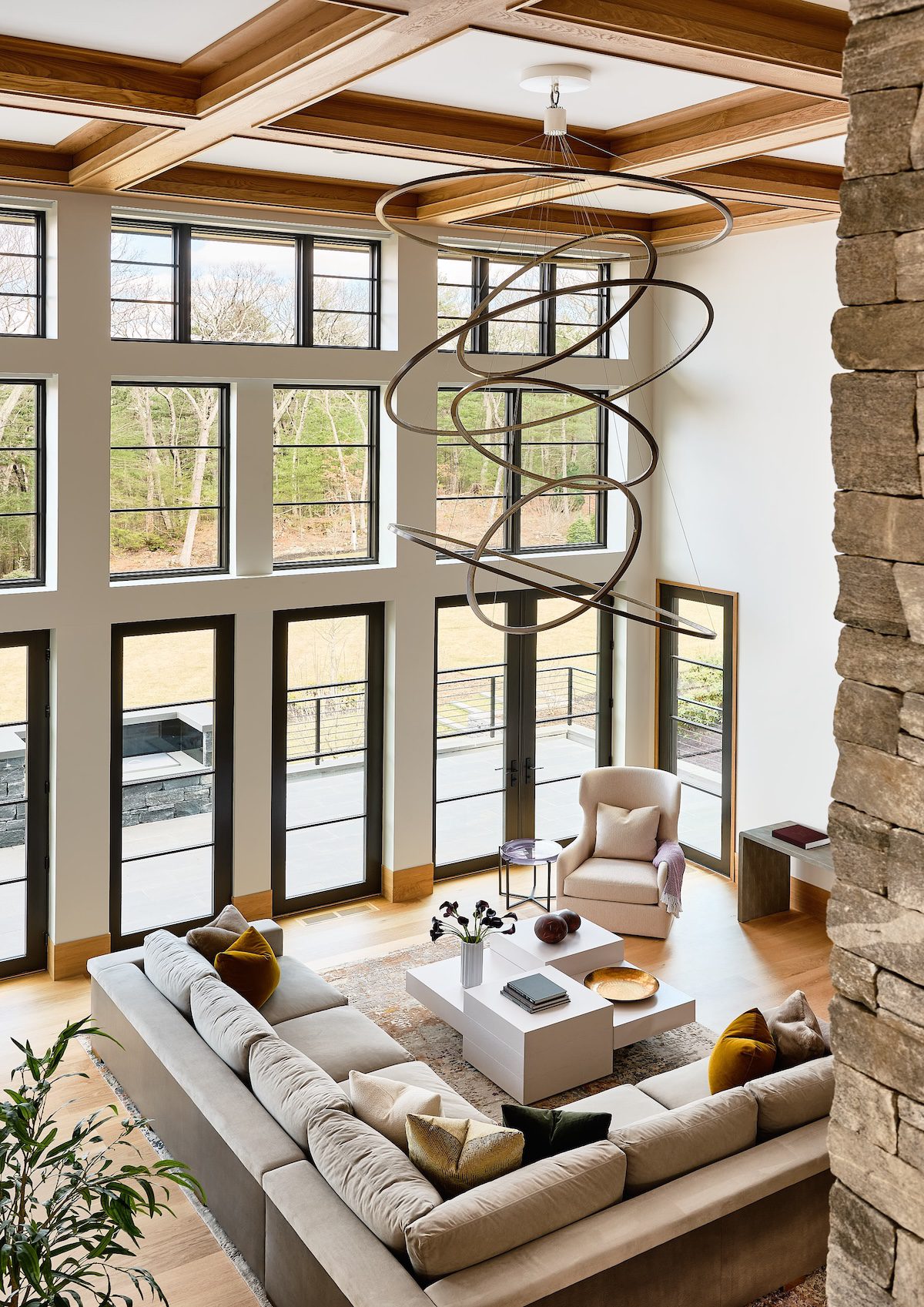
Ceiling heights shift to establish distinct zones, and fireplaces serve as visual anchors. Built-in shelving provides warmth and permanence. Structural beams, changes in flooring materials, and lighting subtly distinguish one area from another without interrupting the overall flow. When great rooms are designed and constructed with intention, spaces feel expansive while remaining comfortable and welcoming.
The Kitchen Can Be the Center of Everything
No longer hidden from view, today’s kitchens can help anchor the great room itself. Large islands become gathering places where children finish homework, friends gather during dinner parties, and conversations continue long after meals are prepared.
The point is that the dining spaces transition effortlessly into the great room living areas, allowing homeowners to host large groups while still serving the moments for everyday life.
Creating Spaces That Feel Grand Without Feeling Overwhelming
One of the greatest challenges in great room design is scale. Larger rooms can quickly become cavernous (hollow-feeling) if proportion isn’t carefully considered. That’s why architectural elements—not simply furniture—are used to establish a sense of comfort. For example, fireplaces, exposed beams, built-in cabinetry, and framed views all help curate the space to maintain coziness and warmth rather than feel overwhelming or empty.
The Residence on West Newton Hill is a great example of this design approach. During the home’s complete transformation, we reconfigured the first floor to create a generous contemporary kitchen that naturally connects to surrounding gathering spaces. This includes the great room. Rather than feeling like one oversized room, each area maintains its own identity while contributing to a seamless overall experience.
A similar philosophy guided the Modern Prairie in Weston. Here, expansive living spaces are balanced with space intentionality and utility; the openness helps daylight to travel throughout the home while maintaining an inviting atmosphere that encourages everyday use just as much as entertaining.
Great Rooms Can Take Many Forms
At the Wellesley Sports Barn & Guest House, the dramatic lodge room shows how a great room can become an entirely different type of gathering space. Designed with exposed structural steel, a full bar, comfortable seating areas, and recreational amenities, the room is a destination for entertaining family and friends, but importantly, it maintains the warmth and character of a traditional lodge.
Likewise, with the Residence on Melrose, we illustrate how removing compartmentalized rooms can completely transform the experience of a home. By opening the kitchen, dining, and living spaces into one cohesive, flowing environment, we created a first floor that feels brighter, more connected, and better suited to modern life without sacrificing a sense of order.
The Big Heart of a Modern Home
Great rooms have remained, and even become more popular because they reflect how people live today. Families want to cook without feeling separated from guests. Parents want to keep an eye on children while preparing dinner. Friends naturally gather around the kitchen island before moving toward the fireplace or adjacent spaces.
When thoughtfully designed, a great room is wonderful for all of these moments; it creates flexibility without sacrificing comfort and openness without losing intimacy.
As one of the premier Boston architecture firms, we design spaces where architecture strengthens connections and helps homes adapt gracefully to both everyday routines and life’s biggest celebrations.
